
London doesn’t do predictable weather. On any given day in this city, you might start the morning wrapped in a grey drizzle, strip down to a t-shirt by noon when the sun breaks through, then pull out an umbrella again by teatime — all while the locals carry on completely unfazed, because this is simply Tuesday in one of the world’s great capital cities. Packing for London means preparing for all of it: the rain, the occasional sunshine, the cold snaps, the surprisingly warm spells, and every layer in between.
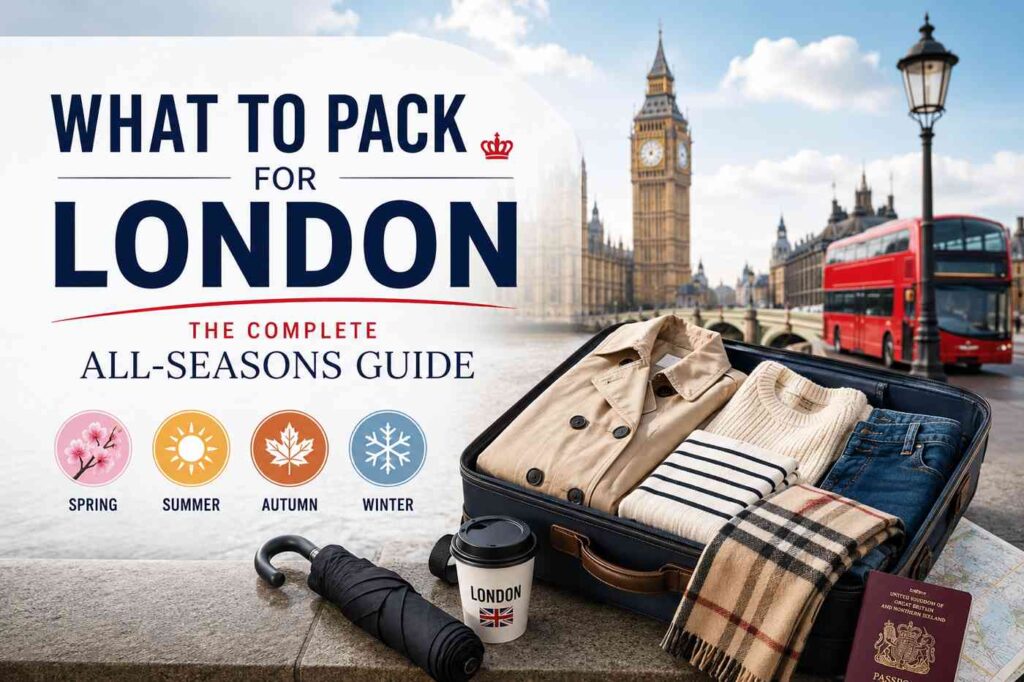
London is a year-round destination. More than 30 million visitors travel there annually, drawn by world-class museums, iconic landmarks, extraordinary food, theatre, parks, and a cultural energy that never really switches off. But unlike beach destinations where you can survive on swimwear and sandals, London demands a thoughtful, versatile suitcase — one that can carry you from a morning walk along the Thames to an afternoon in the National Gallery to an evening at a West End show without missing a beat.
This guide covers exactly what to pack for London across all four seasons: the clothing, footwear, gear, and practical essentials that will keep you comfortable, dry, and stylish no matter when you arrive or how long you stay.
Understanding London’s Weather Before You Pack
London sits in a temperate maritime climate, which is a fancy way of saying it’s mild, frequently overcast, and thoroughly unpredictable. The city rarely experiences extreme heat or extreme cold — but it compensates by keeping you permanently guessing. Here’s a quick seasonal breakdown:
- Spring (March–May): Cool and changeable. Average temperatures range from 8°C to 17°C (46°F–63°F). Sunny days appear, but so do rain showers. Layering is essential.
- Summer (June–August): London’s warmest season, with averages of 18°C–23°C (64°F–73°F), occasionally spiking to 30°C+ (86°F+) during heat waves. Still expect some rain and overcast days. Air conditioning is rare.
- Autumn (September–November): Beautiful and crisp, gradually cooling from pleasant to genuinely cold. Leaves turn, rain increases, and evenings require a proper coat by October.
- Winter (December–February): Cold, grey, and damp, with temperatures between 2°C and 9°C (36°F–48°F). Snow is rare but possible. The city transforms with Christmas lights and festive markets that make the cold entirely worthwhile.
The single most important packing principle for London, regardless of season, is this: always assume rain is possible. A compact umbrella or packable rain jacket should be in your bag every single day.
1. Clothing: The London Layering System
Londoners are masters of the layering system, and you should be too. The key is building outfits that can adapt across a 10–15 degree temperature swing within a single day. This means base layers, mid layers, and outer layers that work together and pack efficiently.
London is also a remarkably stylish city. While there’s no formal dress code for everyday sightseeing, locals tend toward smart-casual as a baseline. You don’t need to dress up constantly, but the city rewards a little effort — you’ll feel more comfortable and confident if your wardrobe leans toward polished rather than purely functional.
Spring Packing (March–May)
- Long-sleeve tops and lightweight knits (4–5) — The backbone of a spring London wardrobe. Thin merino wool is especially good: warm when cool, breathable when warm, and odor-resistant for longer wear.
- Jeans or slim trousers (2 pairs) — Versatile, appropriate everywhere, and smart enough for most restaurants and theatres.
- Light midi dress or trousers with a blouse — For warmer spring days or evening dining.
- Medium-weight jacket — A trench coat is the quintessential London spring layer: water-resistant, elegant, and endlessly practical.
- Light scarf — Doubles as warmth in the morning and style in the afternoon.
Summer Packing (June–August)
- T-shirts and short-sleeve tops (5–6) — London summers can be genuinely warm. Light cotton or linen tops are ideal.
- One or two sundresses or lightweight shorts — For warm afternoons in Hyde Park, Borough Market, or along the South Bank.
- Light cardigan or denim jacket — Evenings cool down noticeably even in summer, and air-conditioned museums, theatres, and the London Underground can be cold.
- One smart outfit — For a nice dinner, a show, or any occasion that calls for a step up from casual. London has no shortage of excellent reasons to dress up.
- Packable rain jacket — Even in July, London rain happens. A packable jacket weighs almost nothing and saves your day.
Autumn Packing (September–November)
- Long-sleeve tops and heavier knits (4–5) — October and November can be genuinely cold, especially in the evenings. Chunky knits earn their place in the bag.
- Jeans, cords, or wool trousers — Heavier bottoms for cooler temperatures. Corduroy is having a permanent moment in London anyway.
- Mid-weight coat — A wool blend coat or structured jacket is essential by October. London’s autumn aesthetic leans heavily into beautiful coats.
- Scarf, light gloves, and a beanie — November mornings in London are cold enough to make these welcome rather than excessive.
- Waterproof outer layer — Autumn rain in London is frequent and sometimes persistent. A proper waterproof jacket or water-resistant coat is non-negotiable.
Winter Packing (December–February)
- Thermal base layers — A thin thermal top and leggings worn under your regular clothes add significant warmth without bulk.
- Chunky knit sweaters (3–4) — London winters call for real knitwear. Merino wool is warm, relatively compact, and looks polished.
- Heavy coat — This is your most important winter item. A long wool or down-filled coat that hits at or below the knee provides dramatically better protection against London’s damp cold than a short jacket.
- Warm scarf, gloves, and a hat — Wind along the Thames in January is biting. Don’t underestimate it.
- Smart-casual layers for indoors — London’s Christmas markets, department stores, and heated pubs mean you’ll be constantly shedding your coat. Dress in layers you can remove comfortably.
- Waterproof outer layer or umbrella-friendly coat — Winter rain in London is relentless. Ideally your heavy coat has some water resistance, or you pair it with a compact umbrella at all times.
Pro tip: Pack neutral colors — navy, grey, camel, black, white. London’s style sensibility leans toward classic, understated tones, and neutrals mix and match effortlessly, letting you build more outfits from fewer items.
2. Footwear
London is an extremely walkable city, and most visitors end up covering far more ground on foot than they anticipate. The average London tourist walks 8–12 miles per day — across cobblestone streets, uneven Victorian pavements, busy market floors, and the occasional muddy park path. Your feet will tell you very quickly whether you made good decisions here.
- Comfortable walking shoes or trainers — This is your most important footwear decision. Choose a pair that you have already broken in. New shoes in London will leave you limping by the third day. Clean, minimal trainers are perfectly acceptable in almost every London setting.
- Waterproof ankle boots or Chelsea boots — A warmer-season alternative to trainers that handles light rain with ease, looks smart enough for evenings out, and works across spring, autumn, and mild winter days. The most versatile shoe you can bring to London.
- One smart pair for evenings — For theatre, nicer restaurants, or any occasion requiring a step up. Loafers, low heels, or clean leather shoes work well. Keep them comfortable enough to walk to and from the venue.
- Warm, waterproof boots (winter only) — For December through February, a pair of warm, waterproof boots becomes genuinely essential. Cold, wet feet in London winter will ruin even the most carefully planned day.
- Moisture-wicking socks — Four to five pairs minimum. Walking this much in any shoes benefits from quality socks, and damp socks in London’s frequent rain are miserable.
What not to bring: High heels for extensive walking, brand new shoes of any kind, or anything with a thin sole that offers no protection against cold, damp pavements in autumn and winter.
3. Rain Gear: Non-Negotiable for Every Season
Rain in London is not a dramatic event — it doesn’t arrive with thunder and fanfare the way Texas storms do. London rain is quiet, persistent, and entirely unbothered by your plans. It arrives as a fine drizzle that lasts all day, or a sharp shower that appears for twenty minutes and disappears. Either way, you need to be ready for it regardless of what month you visit.
- Compact travel umbrella — Small enough to fit in a daypack or large handbag, sturdy enough to handle London wind gusts. Avoid giant golf umbrellas — they’re impractical on narrow London pavements and in the Underground.
- Packable waterproof jacket — A lightweight jacket that compresses into its own pocket is ideal for spring and summer when the rain is lighter. Look for fully taped seams for genuine waterproofing rather than just water resistance.
- Water-resistant bag or bag cover — Your daypack, handbag, or tote should be able to handle rain without soaking everything inside. A waterproof bag cover is a cheap, lightweight solution if your existing bag isn’t water-resistant.
4. Practical Accessories & Essentials
Beyond clothing, a handful of practical items will make your London trip significantly smoother. London is an extremely well-organized, modern city, but it has its quirks — and being prepared for them saves time and frustration.
- Oyster card or contactless payment card — London’s public transport (the Tube, buses, Overground, Elizabeth line) runs on a tap-in, tap-out payment system. A contactless debit or credit card works directly on all London transport, or you can load an Oyster card at any station. Either way, carrying cash for transport is unnecessary and inefficient.
- Universal travel adapter (Type G) — The UK uses a distinctive three-pin plug that is incompatible with European and American sockets. Pack a UK-specific adapter before you leave home; airport options are expensive.
- Portable power bank — A full day of navigating London on Google Maps, photographing landmarks, messaging, and looking up restaurant options will drain a phone battery completely. A compact power bank keeps you connected through long days of sightseeing.
- Reusable water bottle — London tap water is perfectly safe to drink and excellent quality. Refill stations are available throughout the city, and carrying your own bottle saves money and reduces waste on a long trip.
- Lightweight daypack — Essential for carrying your rain jacket, water bottle, camera, snacks, shopping, and anything else you accumulate during a full day out. Keep it compact enough to fit under Tube seats during rush hour.
- Small crossbody bag or money belt — London is a very safe city overall, but tourist areas like Oxford Street, Covent Garden, and Leicester Square attract pickpockets. Keep valuables in a secure bag worn close to the body rather than in a backpack zip pocket.
- Comfortable day bag that fits Tube overhead racks — Overly large backpacks are difficult on crowded Underground carriages and some operators ask you to remove them. Aim for 20–25 litres maximum for day trips.
5. Health, Comfort & Miscellaneous
- Blister pads and foot care — After two days of London-level walking, even comfortable shoes can produce hot spots. Pack moleskin blister pads and apply them at the first sign of rubbing — not after the blister has formed.
- Ibuprofen and basic medications — Available in London pharmacies (Boots is everywhere), but having your preferred brands from home avoids the minor inconvenience of finding a pharmacy on a busy sightseeing day.
- Hand cream and lip balm — London winters are drying, particularly with constant indoor-outdoor temperature changes. Hands and lips suffer noticeably without some basic moisture protection.
- Sunscreen (spring and summer) — London summer UV levels are higher than many visitors expect, particularly during long outdoor days at festivals, markets, or parks. SPF 30+ facial sunscreen is worth packing for any visit between April and September.
- Earplugs — Central London accommodation, particularly budget and mid-range hotels, can be noisy. Street noise, pub crowds, and early morning deliveries are all part of central London life. A pair of foam earplugs weighs nothing and sleeps priceless.
- Reusable tote bag — Plastic bags cost 10p each in UK shops. A foldable tote takes up no space and handles everything from supermarket runs to market shopping at Portobello Road or Spitalfields.
- Small travel umbrella for the bag — yes, again — It really is that important. Pack it. Every day.
6. What NOT to Pack for London
Equally important as knowing what to bring is knowing what to leave behind. London’s airports and hotels are not generous with luggage storage, and dragging an oversized suitcase through the Underground is one of the most uncomfortable experiences available to the modern traveller.
- Heavy, bulky items you can buy there — Toiletries, hairdryers (hotels provide them), and over-the-counter medications are all readily available at Boots, Superdrug, Tesco, and Sainsbury’s. Don’t weigh down your bag with things you can easily replace.
- Too many shoes — Three pairs maximum: walking shoes, smart shoes, and boots or sandals depending on season. London’s streets will ruin delicate shoes and you won’t have room for more anyway.
- Formal business attire unless specifically required — London’s casual-smart dress code handles almost every social situation. Unless you have specific meetings requiring formal wear, leave the suits and formal dresses at home.
- Huge backpacks — A 60-litre trekking backpack is impractical on the Tube, difficult in narrow pub spaces, and excessive for a city trip. A carry-on suitcase plus a small daypack is the London-optimal combination.
- Currency you won’t use — London is overwhelmingly contactless. Most cafes, pubs, restaurants, and shops don’t accept cash at all post-pandemic. Carry a small amount of cash for emergencies, but don’t convert large amounts before you go.
Read Next:
The Complete London Packing List
Clothing (adjust quantities by season)
- Base layer tops or thermal underlayers (winter)
- Long-sleeve tops, knits, or t-shirts (4–6 depending on season)
- Versatile trousers or jeans (2 pairs)
- Dress, skirt, or smart casual alternative (1–2)
- Light cardigan (spring/summer) or chunky knit (autumn/winter)
- Medium or heavy coat depending on season
- Smart outfit for evenings
- Scarf, gloves, and hat (autumn and winter)
- 5–6 pairs of underwear
- 4–5 pairs of moisture-wicking socks
Footwear
- Broken-in comfortable walking shoes or trainers
- Waterproof ankle boots or Chelsea boots
- Smart shoes for evenings
- Warm waterproof boots (winter only)
Rain Gear
- Compact travel umbrella
- Packable waterproof jacket
- Water-resistant daypack or bag cover
Tech & Practical
- UK Type G travel adapter
- Portable power bank
- Reusable water bottle
- Lightweight daypack (20–25 litres)
- Crossbody bag or money belt
- Reusable tote bag
Health & Comfort
- Blister pads and foot care
- Ibuprofen and basic medications
- Hand cream and lip balm
- Sunscreen SPF 30+ (spring and summer)
- Earplugs
- Any personal prescription medications
London rewards the well-prepared traveller generously and punishes the under-packed one mildly but persistently — usually through cold, wet feet or a ruined suede jacket on a drizzly Tuesday. Get your bag right, and you’ll be free to focus on everything that makes this city genuinely extraordinary: the art, the food, the architecture, the parks, the bookshops, the markets, the theatre, and the particular pleasure of standing on Waterloo Bridge at dusk watching the Thames catch the last of the evening light.
Pack smart, layer intelligently, always carry an umbrella, and wear comfortable shoes. London will do the rest.